Frozen Ground and Your Septic System in Central Indiana
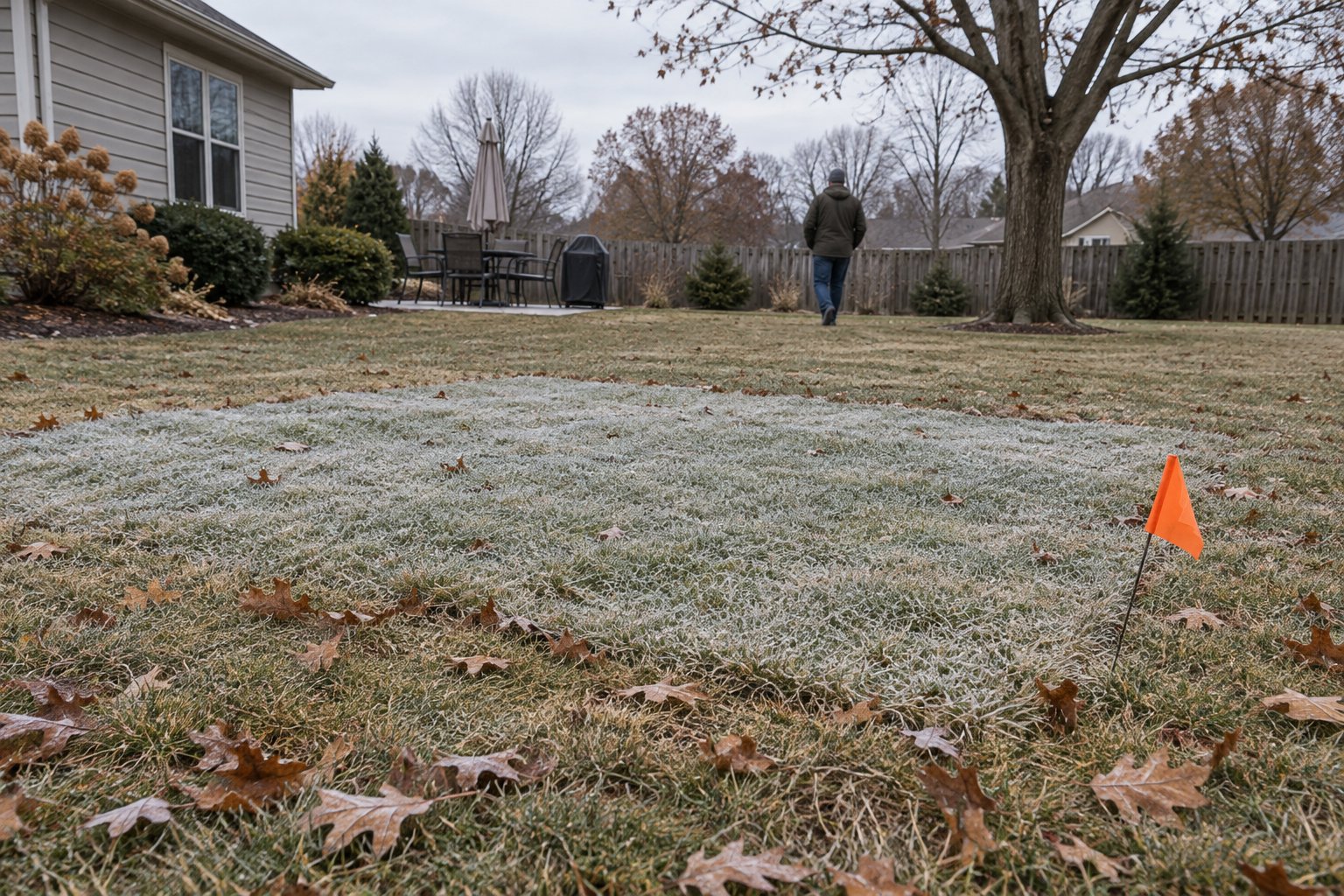
Most Central Indiana homeowners think about frozen pipes in winter. Far fewer think about the septic system buried in the yard. A septic system is mostly out of sight, but it is not immune to cold. When the ground freezes hard and stays frozen, the pipes, tank and soil that treat your household wastewater can all be affected. The good news is that a little knowledge in early November goes a long way.
Here is how frozen ground actually behaves around a septic system in Hamilton, Hendricks, Marion and the surrounding counties, what makes some systems more vulnerable than others, and what you can do before and during a cold stretch.
How Deep Does the Ground Freeze Here?
The Indiana Residential Code lists a design frost depth for every county. For Hamilton, Hendricks and Marion counties (and Boone County next door) the figure is 30 inches. That number is used to set how deep building footings must go so a house does not heave. It is a design value, not a promise about every winter. In a mild year the frost may only reach a few inches. In a long, bitter one with little snow on the ground, it can come close to that design depth.
What matters for your septic system is this: many components are buried well above 30 inches. Purdue Extension notes that many newer onsite systems in Indiana are installed fairly shallow so the soil absorption field can sit in the required 24 inches of aerated soil. Pipes, distribution boxes and the upper part of a tank may all sit within the zone where frost can reach.
Why Snow Is Your System's Best Friend
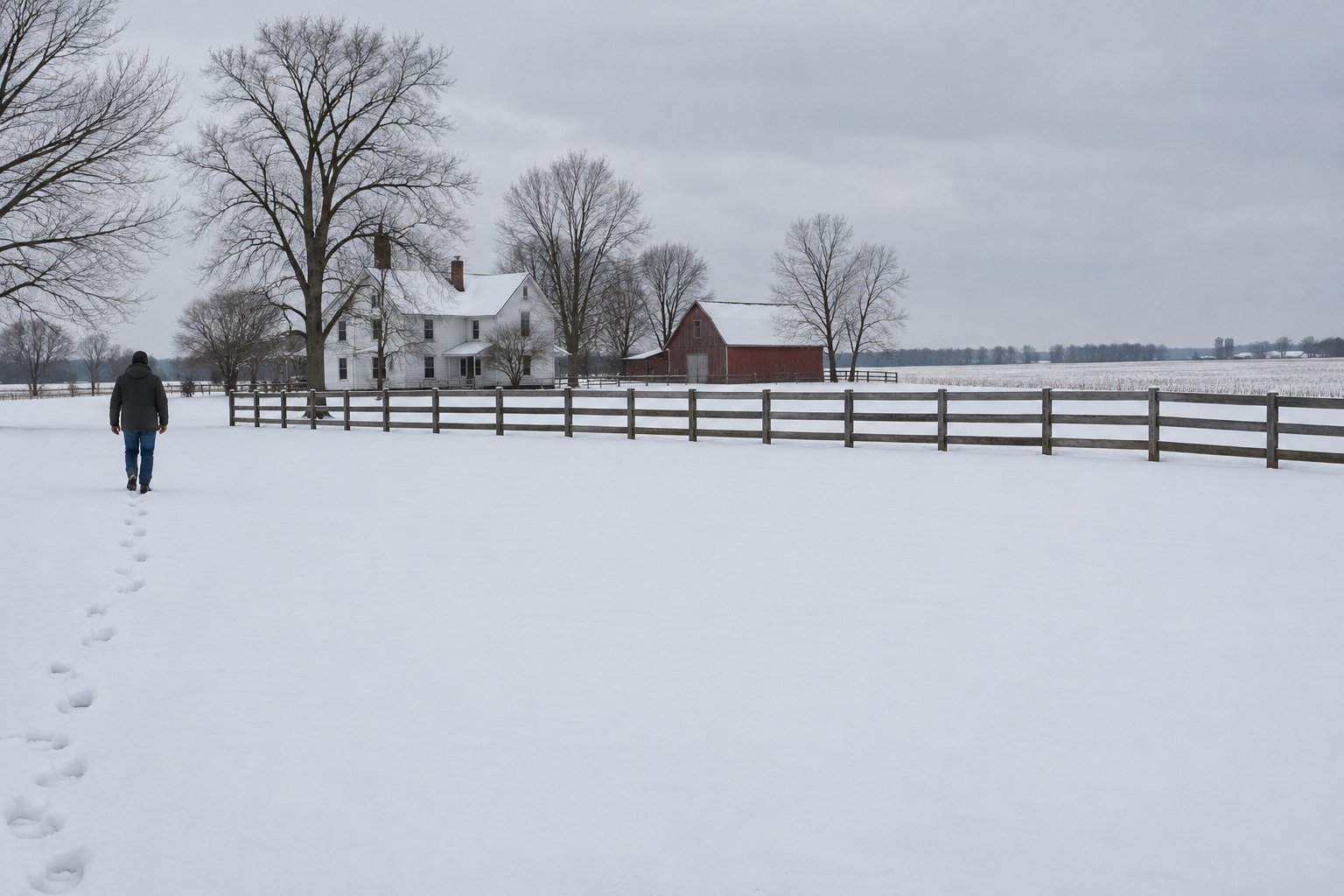
Snow works as an insulating blanket. University of Minnesota onsite wastewater specialists point out that a cold winter with little snow cover is a classic recipe for frozen systems, because without snow the frost goes deeper. Uncompacted snow traps the heat from the wastewater and from the earth below.
Compacted snow insulates much less. That is why guidance from Purdue Extension and from national environmental health groups says to limit traffic over the tank and drain field in freezing weather. Foot traffic, pets, snowmobiles, ATVs, and vehicles pack the snow down and let the cold in. If you plow or blow snow, do not push it off a driveway onto the tank area or pile it where it will be driven over, and do not scrape the snow off the system "to help it thaw." Leaving a natural, fluffy snow layer in place is better.
Common Reasons Septic Systems Freeze
Winter freeze-ups are rarely just bad luck. Extension specialists consistently find the same handful of causes:
- Little or no snow cover during a hard freeze. Bare, cold ground lets frost reach deeper.
- Compacted snow or soil. Driving or parking over the system, or heavy foot traffic on a regular path, removes the insulation.
- Missing, cracked or open lids and risers. Cold air entering through a damaged access opening can chill the tank from the top.
- Pipes that do not drain properly. A sag or low spot in the line from the house to the tank, or the pipe to the drain field, lets wastewater sit and freeze.
- Leaky fixtures. A toilet that runs or a faucet that drips sends a thin trickle down the pipe. That slow trickle can freeze inside the line and eventually seal it shut.
- A drain field that was already soggy. If effluent was surfacing or pooling before winter, it can freeze and block more effluent from entering the soil.
That last point matters in central Indiana. Hendricks County's geology is dominated by glacial till with low permeability and a seasonally high water table, according to the Indiana Geological Survey. Hamilton County's own stormwater planning documents report that most of the soils in its permit area are rated severely limited for onsite wastewater treatment. A drain field on heavy clay that is already working hard in November has less room for error when the ground locks up.
What to Do Before a Hard Freeze
You do not need special equipment for most of this. Take half an hour this month and walk the yard.
- Find your lids. Know where the tank access lids are, and check that each one is intact, level and securely fastened. Indiana law requires ground-level access openings on residential systems installed since mid-1996 to be covered by a securely fastened lid. If a lid is cracked, sunken or loose, that is a safety problem as well as a freezing risk. Do not open it yourself.
- Fix leaks. A running toilet is the most common source of a damaging trickle. Repair it before January.
- Look at the drain field. Wet spots, a sewage odor, or unusually lush green grass in late fall are signs something is already wrong. Have it checked before it freezes.
- Let the grass stay healthy. Purdue Extension recommends a vigorous stand of grass over the absorption field. Keep vehicles, trailers and equipment off it, because they compact soil and snow and can crush shallow components.
- Schedule overdue pumping and inspection. A tank that is near full is not the time to discover a problem when the ground is frozen and the lids are buried. Hamilton County's health department recommends an inspection at least every three years, and most tanks need pumping every three to five years depending on use.
- Mark the lids. A simple marker stake or a drawing of the tank location saves a lot of probing in the snow. Purdue Extension recommends keeping a map of all system components.
What to Do During a Cold Snap
If the temperature plunges and you worry about the system, a few habits help. Spread laundry and dishwasher loads across the week rather than stacking them on one day, so warm water moves through the system steadily. If you will be away for more than about a week, leave the heat on and have someone run warm water now and then. Do not let water run constantly. Constant running overloads the system.
Just as important is what not to do. Do not pour antifreeze, salt, or a septic additive into the system. Do not run hot water nonstop, do not build a fire over the tank, and do not try to pump the sewage yourself. National guidance from environmental health professionals is clear that none of these fix a freeze, and some can cause damage.
Frequently Asked Questions
How deep does the ground freeze in central Indiana?
The state building code uses a 30 inch design frost depth for Hamilton, Hendricks and Marion counties, but actual frost depth changes from year to year. It depends on how cold it gets, how long it lasts, soil moisture and, importantly, how much snow is on the ground.
Should I shovel snow off my septic tank?
No. Snow insulates the system, so it is best to leave it undisturbed. Avoid packing it down with traffic. Shovel only what you need to reach a lid for a scheduled service, and ask your septic company how they would like the area marked.
Can a frozen septic system fix itself?
Sometimes the ice thaws when the weather warms, but extension specialists warn that unless the cause is corrected, the system will probably freeze again the following winter. A professional can find where it froze and why.
Is it safe to pump a septic tank in winter?
Pumping is generally possible when the lids can be located and opened, which is one more reason to mark them. If your property has a very high water table or saturated soil, ask your septic provider before scheduling.
Talk With a Central Indiana Septic Team
Max Haas Septic Services provides septic pumping, inspections, drain field replacement and related services for homes and businesses across Marion, Hamilton, Hendricks, Boone, Johnson, Morgan, Hancock, Shelby and Madison counties. If you have a lid you cannot find, a wet spot in the yard, or a system that has not been checked in years, contact us or request a quote through our contact page before the deep freeze arrives.
